5 Best Alternatives to Dollarwise in 2026 (Free and Paid, From $0 to $6.99/Month)
July 3, 2026
If you found Dollarwise through one of Caleb Hammer's "Financial Audit" videos, you already know the pitch: connect your accounts, swipe transactions into Needs, Wants, or Debt/Savings, and let the 50/30/20 rule do the rest. It's a genuinely clean way to start budgeting - but it isn't cheap. After a 3-day trial, Dollarwise runs $9.99/month (billed quarterly) or jumps to $19.99/month, with an annual plan at $99.99/year. It's also mobile-only (no web or desktop version) and built specifically around U.S. bank accounts.
If that price or those limits don't work for you, here are five alternatives - some fully free, and one that offers a full month free before settling into a subscription that runs well under half of Dollarwise's price.
Why People Look for a Dollarwise Alternative
The app has real strengths, but four friction points drive most people to look elsewhere.
No permanent free tier. The 3-day trial requires a card and converts straight into a paid subscription with no grace period.
Mobile-only. There's no way to review your budget from a browser. If you prefer doing a monthly review on a laptop, you're out of luck.
U.S. banks only. If you bank outside the U.S., or split your life across currencies, Dollarwise simply isn't built for you.
Manual categorization. You still swipe every transaction into a bucket yourself - it doesn't learn or auto-sort from the merchant name, so the work compounds as your transaction volume grows.
The Best Alternatives
1. yavo - best for fast entry and automatic categorization, no bank linking required
1 month free, then $6.99/mo or $39.99/yr
yavo takes a fundamentally different approach than Dollarwise. Instead of linking your bank account and syncing transactions automatically, you log expenses yourself - via receipt scanning, voice entry, or the share-sheet - and yavo automatically detects the spending category from the merchant data the moment you log it. No swiping required, and no bank credentials shared with a third party.
That also means it isn't limited to U.S. banks the way Dollarwise is. It works the same regardless of where you bank.
The trade-off is direct: Dollarwise syncs passively, so it's easy to set up once and stop paying attention. yavo's quick-entry habit keeps you actively looking at what you spend - which is arguably closer to the point of a "financial audit" in the first place.
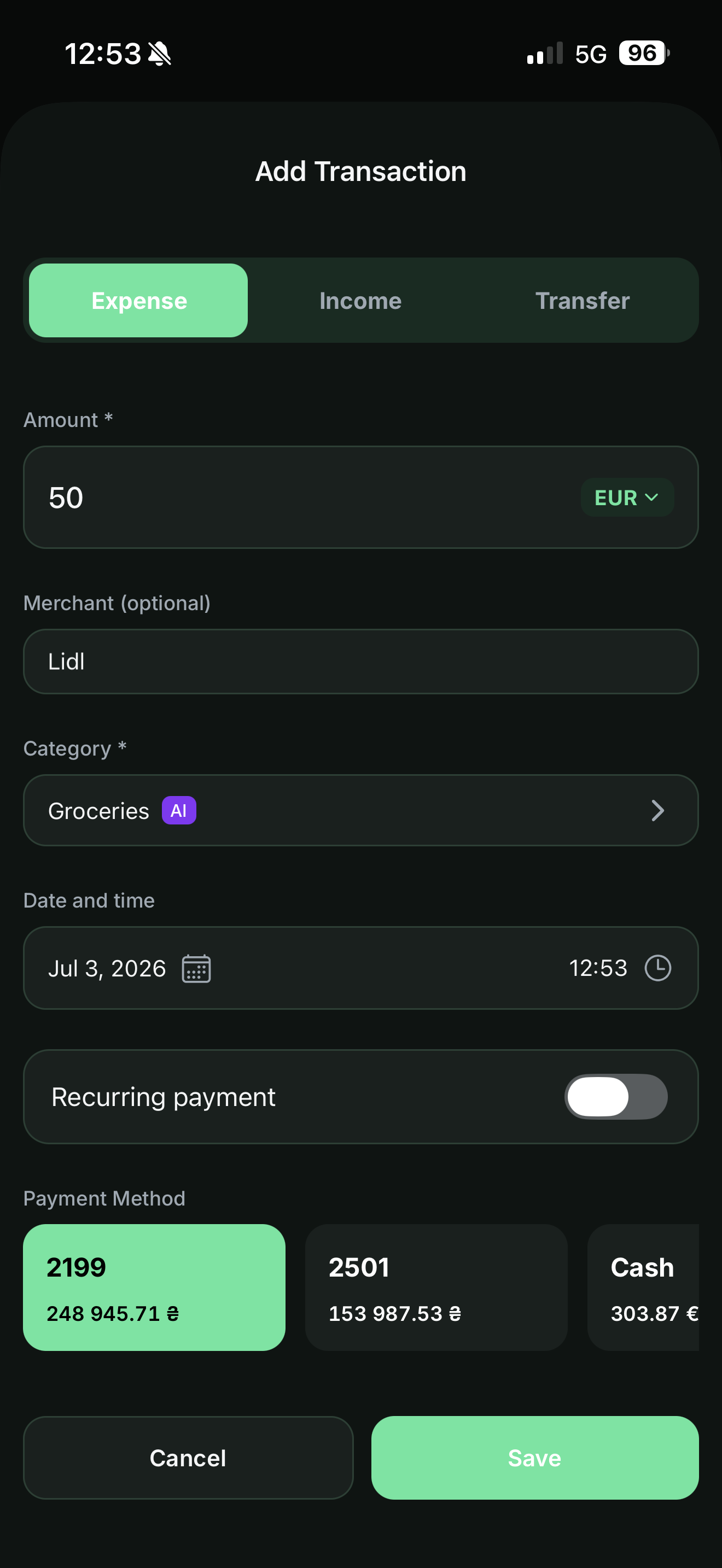
It also covers ground Dollarwise doesn't touch at all: multi-currency support with live exchange rates, debt tracking with payoff predictions (so your Debt/Savings bucket actually forecasts when you'll be debt-free), and custom category rules if you want to rebuild the 50/30/20 structure exactly as you like it.
After a full month free, it settles at $39.99/year - less than half of Dollarwise's $99.99/year plan.
2. Rocket Money - best all-around free option
Rocket Money offers budgeting and spending categories without ever requiring a paid plan, plus it's well known for finding and canceling unwanted subscriptions - useful if subscription creep is part of why you're budgeting in the first place. Bank sync is included, and the free tier is genuinely functional rather than a stripped-down teaser.
3. Goodbudget - best for couples and envelope budgeting
Goodbudget's free tier gives you up to 20 spending envelopes and lets you sync and share a budget with a partner or household - a good fit if you and someone else are budgeting together, which Dollarwise doesn't really support. The envelope method maps well onto the 50/30/20 framework if you want a similar mental model.
4. Empower - best if you also want to track investments
Empower is completely free and lets you sync accounts, categorize spending, and set savings goals alongside investment tracking. It's a solid pick if your financial picture isn't just spending and debt - if you have a portfolio to watch alongside your monthly budget, nothing on this list gives you both in one place at no cost.
5. EveryDollar - best for zero-based budgeting
Built by Dave Ramsey's team and relaunched in January 2026, EveryDollar uses a zero-based budgeting approach where every dollar gets assigned a job. The "margin finder" feature helps surface extra room in your budget before you spend it. A free tier is available, and bank sync comes with the paid plan.
Quick Comparison
| App | Price | Best For | Bank Sync | |---|---|---|---| | Dollarwise | $9.99–19.99/mo (3-day trial) | Guided 50/30/20, Caleb Hammer fans | Yes (U.S. only) | | yavo | 1 month free, then $6.99/mo or $39.99/yr | Quick entry + auto-categorization, multi-currency, debt payoff tracking | No - receipt scan / voice / share-sheet | | Rocket Money | Free (paid tier optional) | Subscription cancellation | Yes | | Goodbudget | Free (20 envelopes) | Envelope budgeting, couples | Manual | | Empower | Free | Spending + investment tracking | Yes | | EveryDollar | Free tier available | Zero-based budgeting | Yes |
Which One Should You Pick?
If what you liked about Dollarwise was the automatic categorization and the bucket-based structure - but not the price or handing over your bank login - yavo is the closest match. Quick manual entry instead of a passive bank sync, auto-sorted the moment you log it, at less than half the annual cost.
If you'd rather have a fully passive bank sync and a permanent free tier, go with Rocket Money, Goodbudget, or Empower depending on whether subscription auditing, envelopes, or investments matter most to you. And if you want a strict zero-based system, EveryDollar is the most structured option here.
Try yavo free for a month - automatic categorization, multi-currency, and debt payoff tracking, then $6.99/mo or $39.99/yr.
Track your expenses with Yavo - free to download